Can Foreigners Buy Property in the UK? A Complete Guide
Yes, foreigners can buy property in the UK. A complete guide to the rules, mortgages, costs and buying from overseas. Μιλάμε Ελληνικά.
Buying from Greece specifically? Read our dedicated guide for Greek buyers →
If you're wondering whether foreigners can buy property in the UK, the short answer is yes.
There are no citizenship or residency requirements to purchase residential property in the UK. Whether you're an EU citizen, a non-EU national, an overseas investor or someone who has never lived in Britain, you can legally buy property anywhere in the UK.
For many international buyers, however, the legal position is only the beginning. The more important questions are often practical. Can you obtain a UK mortgage? Do you need to visit the UK? What taxes and legal costs should you expect? How do you choose the right location when you're unfamiliar with the local market? And how can you buy with confidence if you're living thousands of miles away?
These are sensible questions. After all, purchasing property is one of the largest financial commitments most people will ever make, and buying from another country naturally adds another layer of complexity.
The good news is that overseas buyers have been purchasing UK property successfully for decades. Some travel to the UK several times before making a decision. Others visit only after a shortlist has been prepared, allowing them to focus on a small number of carefully selected properties rather than spending days viewing homes that may never have been suitable in the first place. Some complete the entire purchase remotely with the support of experienced professionals acting on their behalf.
There is no single "correct" approach. The right process depends on your circumstances, your budget and your objectives.
In this guide, we'll explain who can buy property in the UK, how the purchase process works, the financing options available to overseas buyers, the costs you should budget for and the practical considerations that can help you make informed decisions when buying from abroad.
Who Can Buy Property in the UK?

One of the UK's longstanding attractions for international buyers is that, unlike many countries, there are generally very few restrictions on foreign ownership of residential property.
In most cases, you do not need to:
- Be a British citizen.
- Be a UK resident.
- Hold a UK visa.
- Have permanent residency.
- Have previously lived or worked in the UK.
This means overseas buyers can generally purchase property in the UK regardless of where they currently live or what nationality they hold. It applies whether you're buying a family home, purchasing a holiday home, investing in residential property, buying accommodation for a child studying in the UK, or purchasing through a UK company (subject to separate legal and tax considerations).
The legal buying process is broadly the same for both UK residents and overseas buyers. The main additional requirement is that your solicitor will normally carry out enhanced identity and anti-money laundering checks. This typically involves providing proof of identity together with evidence showing the legitimate source of the funds being used to purchase the property. These checks are a standard part of buying property in the UK and are designed to protect both buyers and sellers.
Does Buying Property Give You a UK Visa?
This is one of the most common questions asked by overseas buyers. The answer is no.
Buying property in the UK does not give you a visa, permanent residency or British citizenship. Property ownership and immigration are completely separate matters.
However, depending on your nationality and immigration status, many overseas buyers are able to visit the UK for up to six months per visit under the UK's visitor rules. Property ownership itself does not provide any additional immigration rights or extend the amount of time you are permitted to stay.
If your long-term intention is to relocate permanently, you'll need to ensure you have the appropriate immigration status independently of your property purchase.
How to Buy Property in the UK as a Foreigner: Step by Step
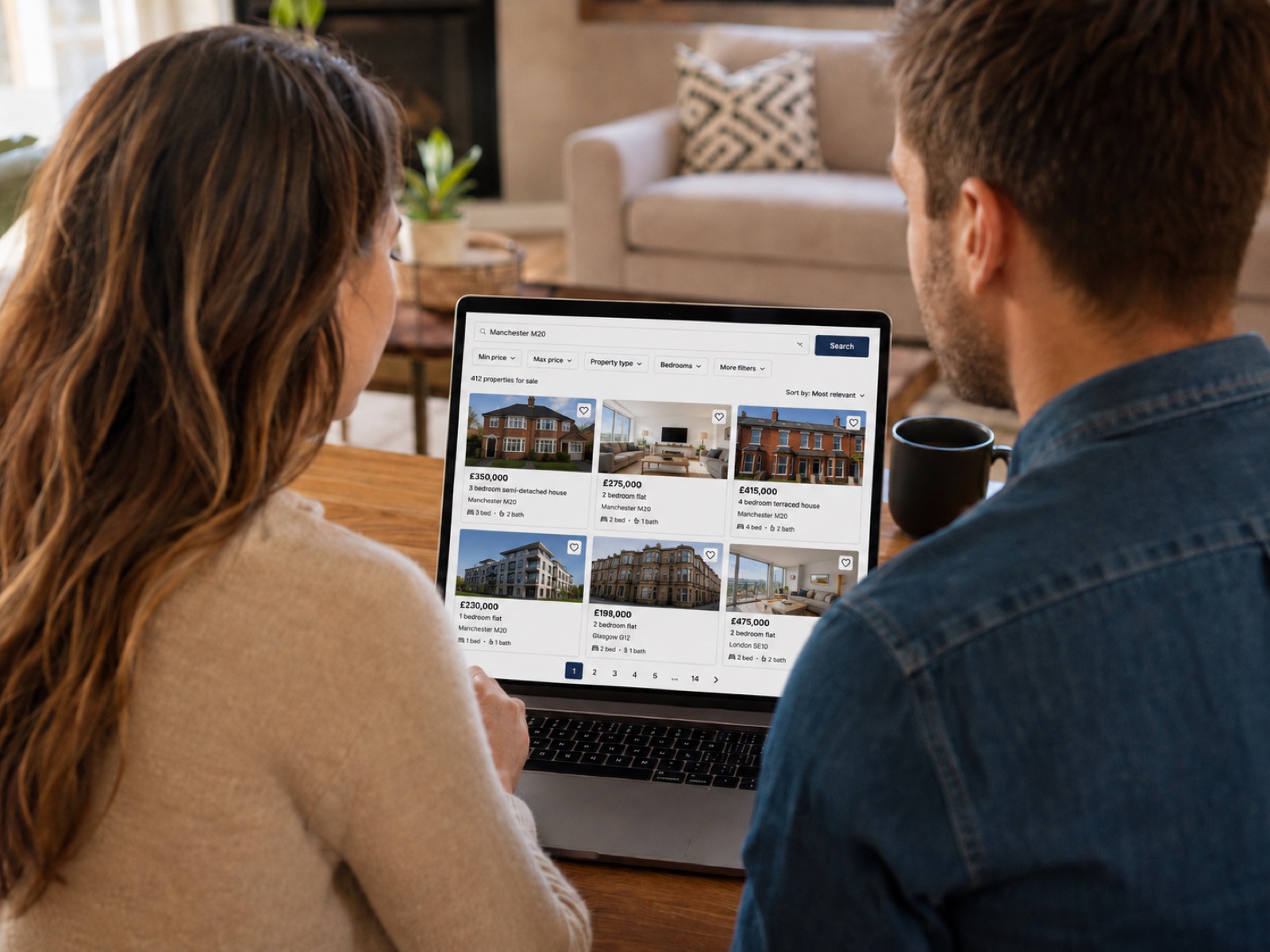
Although every purchase is unique, the overall buying process is remarkably similar whether you're based in London, Athens, Dubai or New York. The difference isn't usually the legal procedure. It's how you choose to manage the process while living overseas.
Step 1: Establish Your Budget
Before beginning your property search, decide whether you'll be buying with cash or using a mortgage. Having a realistic budget from the outset allows you to focus on suitable properties and provides greater confidence when you're ready to make an offer. If you intend to obtain a mortgage, many buyers choose to speak with a mortgage adviser early in the process so they understand how much they may be able to borrow before viewing properties.
Step 2: Decide Where You Want to Buy
Choosing the right location is often more important than choosing the property itself. Different towns, cities and even neighbouring streets can vary significantly in terms of property prices, rental demand, schools, transport links, future development plans and long-term growth potential.
For buyers who are unfamiliar with the UK, this is often one of the most challenging parts of the process. Many begin by researching online, speaking with local professionals or asking friends and family for recommendations. Others choose to work with an independent property buying agent who can help narrow the search based on their objectives before individual properties are even considered.
Step 3: Shortlist and View Properties
Modern property websites make it easy to browse thousands of listings from anywhere in the world. However, online photographs rarely tell the whole story. Whenever practical, viewing a property in person is always worthwhile.
Many overseas buyers choose to travel to the UK once they have identified a shortlist of suitable properties, allowing them to compare several carefully selected homes during a single visit. Others ask a trusted representative to attend initial viewings, provide independent feedback or carry out preliminary due diligence before they travel themselves. Where visiting isn't practical, detailed virtual viewings and independent local representation can still provide valuable insight throughout the decision-making process.
Step 4: Make an Offer
Once you've identified the right property, your offer is submitted through the estate agent acting on behalf of the seller. Negotiations may follow before a price is agreed. Depending on the circumstances, buyers sometimes negotiate not only the purchase price but also proposed completion dates, fixtures and fittings or other terms of the transaction.
Step 5: Instruct a Solicitor
Once your offer has been accepted, you'll normally appoint a UK solicitor (or conveyancer) to manage the legal aspects of the purchase. Their role includes reviewing contracts, carrying out legal searches, raising enquiries with the seller's solicitor, handling the transfer of funds and registering your ownership after completion. Your solicitor is also responsible for carrying out the necessary identity and anti-money laundering checks before the purchase can proceed.
Step 6: Arrange Your Mortgage (If Required)
If you're buying with a mortgage, your lender will assess your application before issuing a formal mortgage offer. Depending on your circumstances, overseas buyers may be asked to provide additional documentation compared with UK residents, particularly where income is earned overseas or multiple currencies are involved. For this reason, many international buyers benefit from working with mortgage advisers who regularly deal with foreign nationals and non-resident applicants.
Can Foreign Nationals Get a UK Mortgage?
Yes. Many overseas buyers successfully obtain UK mortgages every year. A number of UK lenders offer mortgage products specifically for foreign nationals and non-residents, although the options available will depend on your individual circumstances.
Lenders will typically consider factors such as your country of residence, your nationality, your income and employment, whether you are self-employed or employed, the size of your deposit, the type of property you're buying, and whether the property will be your home or an investment.
Compared with UK residents, overseas applicants may be asked to provide additional documentation, particularly where income is earned abroad or multiple currencies are involved. Lending criteria can vary significantly from one lender to another, which is why many international buyers choose to speak with a mortgage adviser before they begin making offers.
At GotValue, we are not mortgage advisers and do not provide mortgage advice. However, we work closely with experienced English and Greek speaking mortgage advisers who regularly assist overseas buyers purchasing property in the UK. Where appropriate, we're happy to introduce clients to professionals whose experience matches their individual circumstances.
What Does It Cost to Buy Property in the UK as a Foreigner?
When budgeting for a property purchase, it's important to consider more than just the purchase price. Additional costs may include:
- Property transaction taxes.
- Solicitor's and conveyancing fees.
- Property survey costs.
- Mortgage arrangement and valuation fees (where applicable).
- Land registration charges.
- Currency exchange costs if transferring funds internationally.
- Home insurance.
- Independent UK-based property buying agent fees.
Depending on your circumstances, overseas buyers may also be subject to additional property taxes. Tax legislation and transaction costs can change over time, so it's always advisable to obtain professional advice based on the current rules that apply to your individual circumstances rather than relying on figures that may no longer be up to date. Planning for these costs early helps avoid unexpected surprises later in the purchase process.
Buying Property from Overseas: What Actually Changes?

Buying property from overseas isn't necessarily more difficult than buying locally. The legal process is broadly the same. What changes is how you gather information and make decisions.
At first glance, buying property can look like a simple legal transaction: find a property, agree a price, instruct a solicitor, complete. In reality, the legal process is only one part of a successful purchase. Choosing the right property, in the right location, at the right price is usually a far more important decision than the paperwork itself.
If you already live in the area, you can revisit a property several times, compare neighbouring streets, drive around at different times of the day and ask local people about the neighbourhood. When you're buying from another country, those opportunities naturally become more limited. Even if you plan to travel to the UK before purchasing, you'll usually spend only a short time in the area before making one of the largest financial decisions of your life.
That's why successful overseas buyers rarely rely on a single viewing or an estate agent's description alone. They combine what they see themselves with independent research, local knowledge and professional advice. Distance doesn't necessarily create new risks. It simply makes existing risks harder to identify. The objective isn't simply to buy property in the UK. It's to buy the right property.
Start with the Location, Not the Property
One of the most common mistakes buyers make is falling in love with a property before properly understanding its location. A beautifully presented home can immediately capture your attention. Modern photographs, recent renovations and an attractive asking price can make a property appear ideal. But the property itself is only one part of the decision.
Experienced buyers usually begin somewhere else. They first ask questions such as:
- Is this an area where people genuinely want to live?
- How has the local market performed over the past decade?
- What are comparable properties actually selling for?
- What are similar homes genuinely achieving in rent?
- Are there regeneration or infrastructure projects planned?
- Are there any local factors that aren't obvious from an online listing?
Only once those questions have been answered does the property itself deserve detailed analysis. Whether you're buying a family home or an investment property, understanding the location is often more important than choosing the property itself.
Verify Before You Commit
Buying property inevitably involves a degree of uncertainty. The objective isn't to eliminate uncertainty completely. It's to reduce avoidable uncertainty before committing your money.
When buying from overseas, it's easy to rely on estate agent descriptions, professional photographs, advertised rental figures, online property valuations, or opinions shared on internet forums and social media. None of these sources are necessarily wrong, but none should be accepted without question.
A property described as being in an "up-and-coming area" may genuinely benefit from major regeneration. Equally, it may simply be marketing language. An advertised rental figure may reflect current market evidence, or it may be an optimistic estimate. The more significant the financial decision, the more important it becomes to verify the information on which that decision is based. Independent research doesn't remove every risk. It helps reduce avoidable surprises.
The Value of Trusted Professionals on the Ground
Buying property is rarely a one-person process. Regardless of whether you live in the UK or overseas, you'll normally rely on several professionals throughout the purchase. Your solicitor protects your legal interests. Your surveyor assesses the property's condition. Your mortgage adviser helps you understand your financing options.
If you're unfamiliar with the local market or unable to spend significant time in the area, having someone you trust on the ground can also provide valuable local knowledge and independent representation throughout the purchase. Many overseas buyers choose to travel to the UK after suitable properties have been identified and preliminary negotiations have taken place. Rather than spending several days viewing dozens of properties, they focus on a carefully selected shortlist that has already undergone initial research and due diligence. This allows them to use their time more efficiently while still making the final decision themselves.
What Does a Property Buying Agent Do?

Many people are familiar with estate agents. Fewer are familiar with property buying agents. The difference is straightforward. An estate agent is appointed by the seller and acts in the seller's interests. A property buying agent is appointed by the buyer and acts solely in the buyer's interests. (You can read more about how this works in our guide to property deal sourcing.)
Depending on your requirements, a buying agent may assist with:
- Defining your property search criteria.
- Identifying suitable properties.
- Researching locations and local market conditions.
- Carrying out independent due diligence.
- Attending viewings on your behalf where appropriate.
- Providing honest, impartial feedback.
- Assessing asking prices against comparable market evidence.
- Negotiating with estate agents.
- Coordinating with solicitors, mortgage advisers, surveyors and other professionals throughout the purchase.
Not every overseas buyer requires the same level of support. Some simply need independent advice before making an offer. Others prefer assistance throughout the entire purchase. The important point is that a buying agent represents the buyer, not the seller.
Frequently asked questions
- Can foreigners buy property anywhere in the UK?
- Yes. In most cases, foreign nationals can buy residential property throughout the UK, subject to the normal legal requirements that apply to all buyers.
- Do I need to visit the UK before buying?
- No. Many overseas buyers successfully purchase property without travelling to the UK. However, whenever practical, visiting shortlisted properties and their surrounding areas before making a final decision can provide additional confidence. Many buyers combine one or two visits with the support of trusted professionals acting on their behalf throughout the process.
- Can foreigners get a UK mortgage?
- Yes. Many UK lenders offer mortgage products for foreign nationals and non-residents, although eligibility requirements vary between lenders.
- Will I pay additional taxes because I'm not a UK resident?
- Depending on your circumstances and where the property is located, overseas buyers may be subject to additional property taxes. As legislation changes periodically, it's advisable to obtain professional advice based on the current rules that apply to your own situation.
- Is a property buying agent the same as an estate agent?
- No. Estate agents represent the seller. A property buying agent represents the buyer and acts solely in the buyer's interests throughout the purchase.
Buying property in the UK as a foreign national is entirely possible, and every year thousands of overseas buyers successfully purchase homes and investment properties across the country. The legal process is relatively straightforward. The greater challenge is making informed decisions when you're less familiar with the market, the locations and the professionals involved.
Whether you choose to visit the UK several times, travel only after a shortlist has been prepared or complete much of the purchase remotely, careful preparation and independent advice can help you buy with greater confidence.
At GotValue, we specialise in helping overseas buyers purchase property in England and Scotland, with independent research, local knowledge and professional support tailored to their individual requirements. We offer a free initial consultation, where we can discuss your objectives, answer your questions and explain how we may be able to assist with your purchase.
Whether you're searching for a family home, a second home or an investment property in England or Scotland, we're here to help. We assist buyers in these areas, including clients based overseas, in both English and Greek (Μιλάμε Ελληνικά).